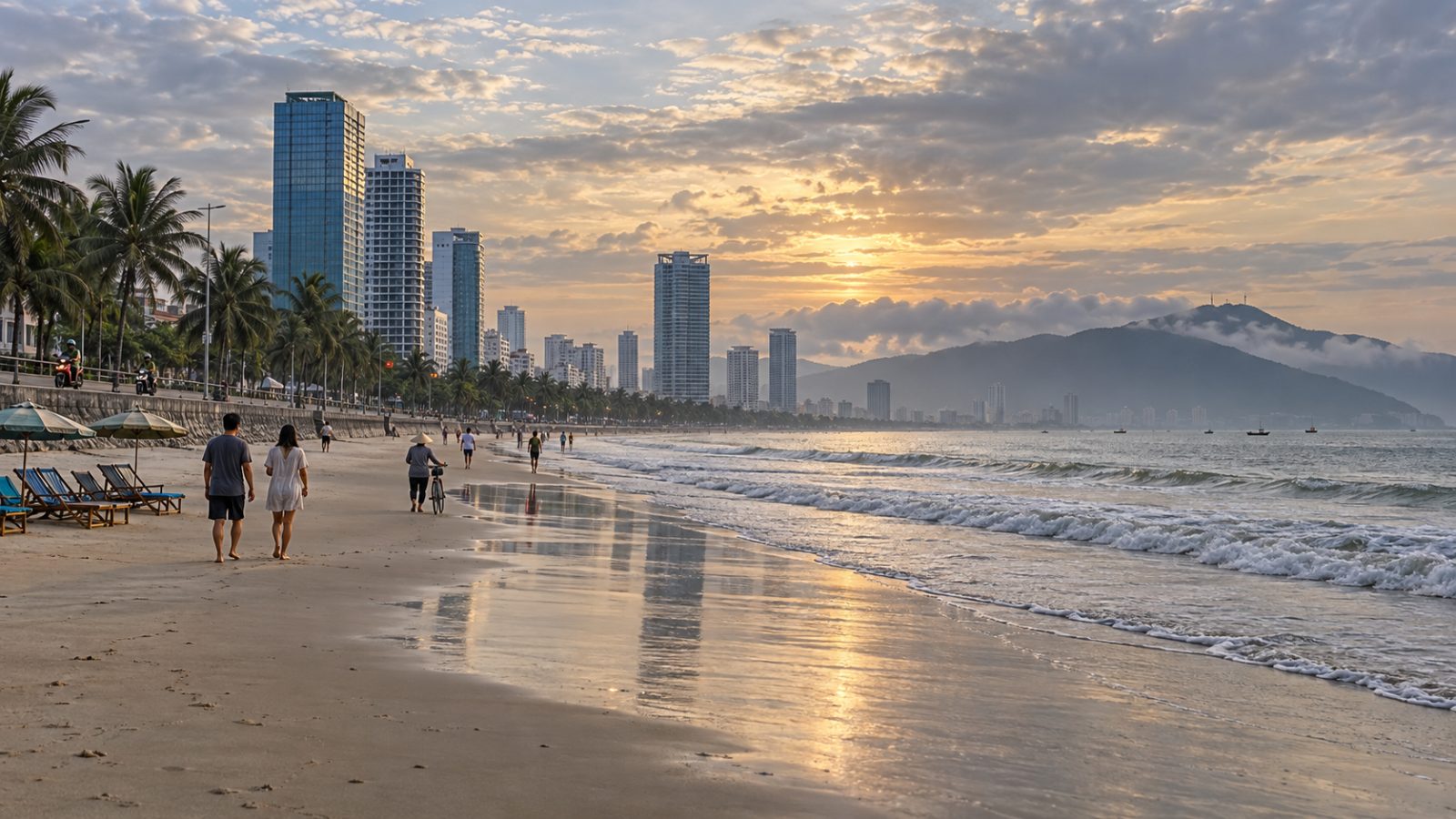

Walk along My Khe Beach after 9pm and the only danger you’ll likely face is tripping over a beach chair in the dark. Da Nang ranks among the calmest cities in Vietnam for visitors, with violent crime against tourists rare enough that most travelers never give it a second thought.
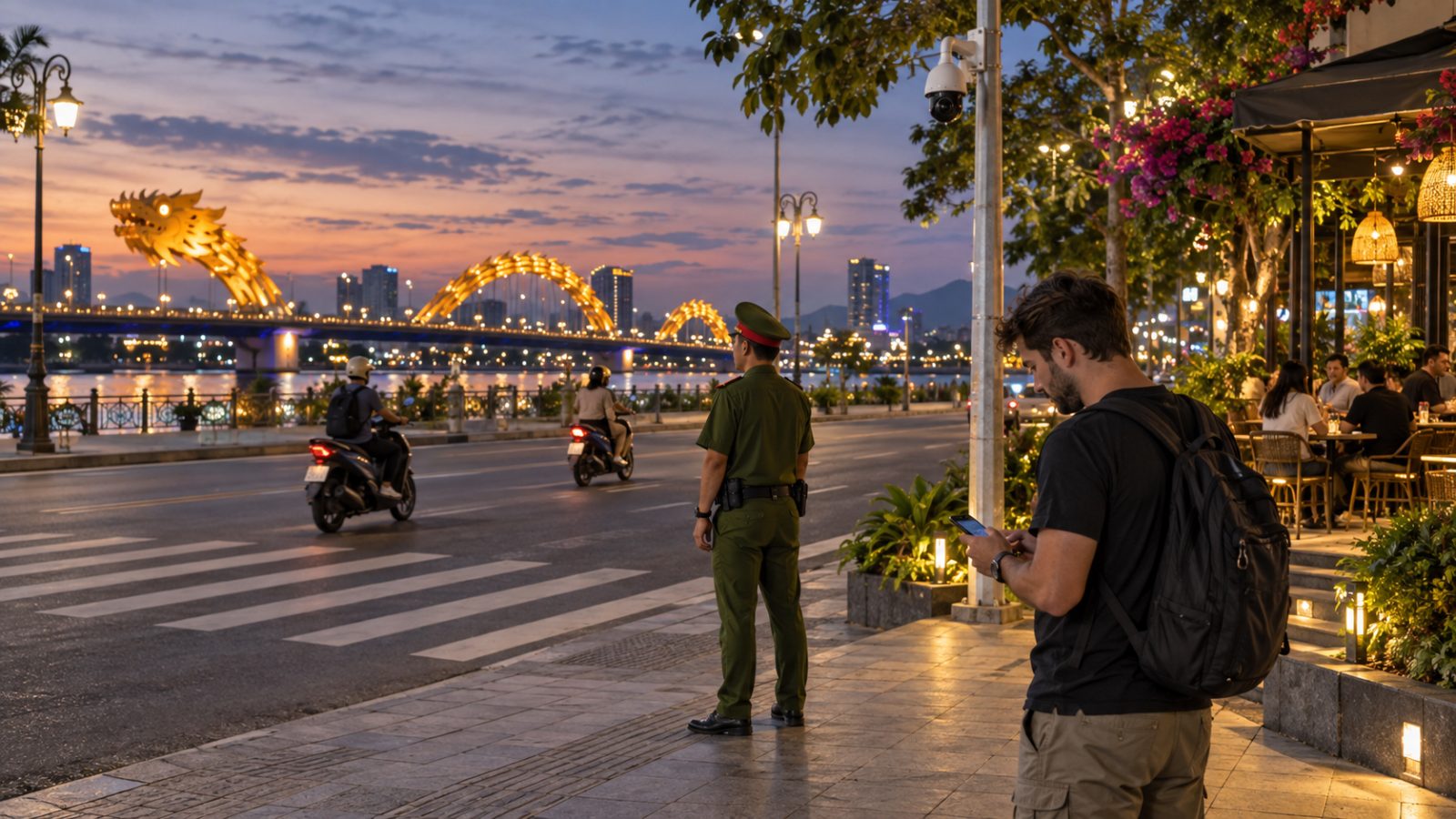
That doesn’t mean every street or every hour works the same way. The riverfront near the Dragon Bridge stays bright and busy past midnight, while quieter alleys a few blocks back empty out fast.
Knowing which is which, and what to have ready before you land, makes the difference between an easy trip and an avoidable headache.
Is Da Nang Safe in 2026? The Short Answer
Yes, Da Nang is safe for tourists in 2026, in the way most of coastal Vietnam is safe: comfortable enough to walk around without thinking about it twice, with a short list of practical risks to keep in mind.
The real danger here isn’t violent crime. It’s opportunistic theft and transport scams, the kind that cost you a phone or a few hundred thousand dong and affect your trip more than your safety.
Phone snatching from passing motorbikes and inflated motorbike-taxi fares are the two issues that actually show up in visitor reports. Both are avoidable once you know they exist.
What Safety Looks Like on the Ground
In the main tourist corridors, during the day, nothing about Da Nang feels tense. Shops are open, traffic is loud but orderly by local standards, and people are generally helpful if you look lost.
The moment to pay attention is when you’re standing near a road with your phone out, texting or checking a map. That’s the exact setup a snatcher on a motorbike looks for. Step back from the curb before you unlock your screen, and you’ve removed most of the risk.
The same logic applies at traffic lights and crosswalks. Da Nang’s streets move fast, and distracted walking causes more trouble here than strangers do.
Why the Waterfront Areas Feel Different After Dark
Part of what makes Da Nang easy to recommend is that its main landmarks don’t go dark at night. The promenades around My Khe Beach, Dragon Bridge, and the Han River stay well-lit well into the evening, which keeps them busy with locals and visitors alike.
That matters for how you plan an evening here. A lit, populated waterfront feels different from an empty side street, and Da Nang gives you plenty of that within easy walking distance of most hotels.
Where Da Nang Feels Busiest After Dark (and Where to Slow Down)
Evenings in Da Nang split cleanly into two kinds of streets: the ones that stay full of people until late, and the quieter connectors between them. Knowing which is which makes the difference between an easy night out and an avoidable headache.
The Lively Zones
The beach promenade and the Bach Dang riverfront are the backbone of a Da Nang evening. Both stay busy and lit well into the night, with a steady flow of walkers, food stalls, and traffic that keeps the area populated.
A few streets back from the sand, the An Thuong bar grid runs the other kind of lively. It’s compact, roughly five streets deep between the beach and Vo Nguyen Giap, and most nights it’s still going strong around midnight.
Because it’s small, you’re rarely more than a block from a crowd. That’s part of why it’s become the default spot for a night out.
The Spots Worth Extra Attention
The risk isn’t the main roads themselves. The risk is in the lanes that connect them, including the short cuts between An Thuong and My Khe, the side streets just off Bach Dang, and the small alleys around the night markets.
These connectors are quieter, less lit, and exactly where scooter-based phone snatching tends to happen. A rider passes close, grabs what’s in your hand, and is gone before you’ve processed it.
- Stick to the main lit roads even if a lane looks like a shortcut home.
- Save the quick route through a quiet alley for daylight, not for the walk back from An Thuong.
- If you need to check your phone, step into a doorway or a lit storefront first, not onto the edge of the street.
- On the way back, the longer route along Bach Dang or the promenade costs a few extra minutes and buys a lot more comfort.
Getting From the Airport Into Da Nang
Da Nang International Airport sits close to the city, and the trip from arrivals to your hotel is one of the easiest parts of the whole visit. Knowing the official setup ahead of time means nobody can talk you into paying more than you should.
Finding the Official Taxi Rank
The taxi fare chart is posted at pillar number 02 in the public arrival area, right where you’ll walk out after collecting your bags. It’s worth a quick look before you head outside.
The official taxi rank is just outside arrivals. Mai Linh and Vinasun both operate from this rank, and their cars run on the meter with no negotiated flat rate.
Sticking to this rank is the simplest way to avoid the handful of unofficial drivers who hover near the exits offering rides at whatever price they feel like naming.
What a Metered Ride Actually Costs
For context, a taxi transfer from the airport to the city center takes 10–15 minutes, not counting any wait, and runs 60,000–100,000 VND (US$2.5–4) on the meter.
If you’d rather lock in a price before getting in, prepaid booth fares to the city center or the beach run 150,000–180,000 VND. Use that number for comparison if a driver quotes you something higher at the curb.
The posted meter chart at pillar 02 breaks the fare down by distance and seat count, so you can check it line by line.
| Distance | 5-seater | 8-seater |
|---|---|---|
| 0 km (starting fare) | 17,143 VND (US$0.68) | 19,429 VND (US$0.77) |
| 5 km | 11,143 VND (US$0.44) | 15,429 VND (US$0.61) |
| 30 km | 13,143 VND (US$0.52) | 14,429 VND (US$0.56) |
These are the per-unit rates the meter uses at each distance band, not a running total, so don’t expect them to add up neatly. The chart’s real job is letting you glance at the driver’s meter and confirm it matches what’s posted.
The Extra Fee on Ride-Hailing Apps
If you book a Grab instead of taking a taxi, expect a 30,000 VND pickup fee added on top of the fare. The app shows this fee separately in the trip breakdown, and it’s paid in cash to the driver.
That’s a normal part of picking up from the airport, not a sign of a scam. A driver asking for extra cash beyond that, with no explanation on the app, needs a clearer explanation before paying.
Emergency Numbers and Medical Care Worth Saving in Your Phone
None of this is likely to come up on a normal trip. Saving three numbers and one address before you head out takes thirty seconds, and it’s the kind of thing you don’t want to be searching for mid-emergency.
The Numbers to Save Right Now
- 115 – the national ambulance number, free to call.
- 113 – police.
- 112 – search and rescue.
These are listed on Da Nang’s official city phone-number page, and they work the same way they would anywhere else in Vietnam. Call 115 for a medical emergency, 113 for a police matter, and 112 for search-and-rescue situations.
Where to Go for Treatment
Da Nang Hospital, at 124 Hải Phòng St., Thạch Thang, Hải Châu, is the main public hospital in the city. Its public-emergency line is 0236 3821 118.
It’s a solid option for genuine emergencies, but English is limited. If you don’t speak Vietnamese and the situation allows it, having someone call ahead or translate helps.
For English-speaking care, two private options run emergency departments around the clock.
| Facility | Emergency Line | Notes |
|---|---|---|
| Family Medical Practice Emergency | +84 236 3582 699 | 24/7, English-speaking |
| Vinmec Da Nang Hospital | +84 236 3711 111 | Emergency department open 24 hours, including weekends and holidays |
The decision comes down to two things, including how severe and time-sensitive the situation is and how much language comfort matters. For anything serious, call 115 and let the ambulance route you to the nearest capable facility.
For something that needs a doctor but isn’t life-threatening, Family Medical Practice or Vinmec will get you through the visit in English without the extra step of translation.
Quick Answers to Common Questions
Most people searching for Da Nang’s safety already know the broad answer and want the specifics behind it. Numbeo’s crime and walking-safety scores give a clear baseline, and the city’s weather pattern (dry season January–July, rainy season August–December) shapes how comfortable those walks feel.
Is Da Nang Safe at Night?
Yes, with a caveat. Numbeo gives Da Nang a safety score of 71.99 for walking alone at night, solidly in comfortable territory but noticeably lower than its daytime score. That lines up with the extra caution worth taking after dark.
Is Da Nang Safe for Solo Travelers?
Yes. Numbeo scores the city 91.27 for safety when walking alone during the day, one of the stronger numbers you’ll find for a mid-sized Vietnamese city. Solo travelers generally move around without issue in daylight hours.
Does Da Nang Have a Low Crime Rate?
Yes. Numbeo puts Da Nang’s crime rate at 13.27, a low figure by international standards. Petty theft still happens, but it’s rare enough that it shouldn’t shape how you plan the trip.