
A scooter idles beside you along the beachfront promenade, a hand slips into your bag for a phone, and it’s gone before you finish the sentence you were about to say to whoever you’re walking with. That’s the kind of risk Nha Trang actually carries.
Violent crime against tourists is rare. The real list is shorter and more mundane: pickpockets near the beach, taxi meters that run a little too fast, a tour guide who adds fees that weren’t on the brochure. Night walks along the central beachfront and the compact nightlife strip are generally fine. A few specific corners aren’t, and the time of night matters more than the neighborhood itself.
Getting From Cam Ranh Airport to Nha Trang
Cam Ranh International Airport (CXR) sits about 35 km (22 miles) south of downtown Nha Trang, so every trip starts with a ride into the city. The drive itself isn’t risky. It’s worth planning for one thing: getting overcharged on that first ride before you’ve even checked into a hotel.
Airport Bus No. 18
The cheapest option is Bus 18, which runs daily from 5:30am to 9:30pm, departing every 30 minutes. It drops you right in the center, at 86 Tran Phu Street.
The fare sat at 65,000 VND ($2.70) per person for most of early 2026, then rose to 75,000 VND starting March 26, 2026. Depending on where and when you buy the ticket, expect to pay somewhere between 50,000 and 80,000 VND. That fixed, posted price means there’s nothing to negotiate, which makes the bus the safest bet if you’re landing alone or late at night.
Grab and Licensed Taxis
Grab from Cam Ranh to Nha Trang typically runs 250,000–450,000 VND. The price locks in through the app before the car arrives, so there’s nothing to haggle over at the curb.
Licensed taxis cost more, usually 350,000–500,000 VND. Stick to Mai Linh or Vinasun. Both are the standard companies named in official transfer guides, and their meters should land in that range.
Whichever option you pick, keep a record of it. Screenshot your Grab trip details, note a taxi’s plate number, or hold onto your bus ticket until you’re settled at the hotel. If a price doesn’t match what’s listed here, that’s your cue to ask questions before you pay.
What Crime and Scams Actually Look Like Here
Nha Trang isn’t a dangerous city, and it isn’t trouble-free either. The issues that come up are predictable. Petty theft happens in crowds, and the occasional overcharge comes from a taxi, tour operator, or beach vendor. Knowing where these cluster does most of the work.
Bag Snatching and Pickpocketing
Local risk trackers rate petty crime in Nha Trang as moderate, around 5 out of 10. That lines up with what actually happens, including bag snatching, unattended phone theft, and pickpocketing. It’s concentrated in crowded tourist spots and markets.
The pattern is almost always opportunistic. Someone on a motorbike swings close to the sidewalk and grabs a phone mid-call, or a bag left on the back of a beach chair disappears while you’re in the water.
A few habits cut the risk sharply. Keep your phone in a front pocket or zipped bag, not in your hand, when you’re near the road.
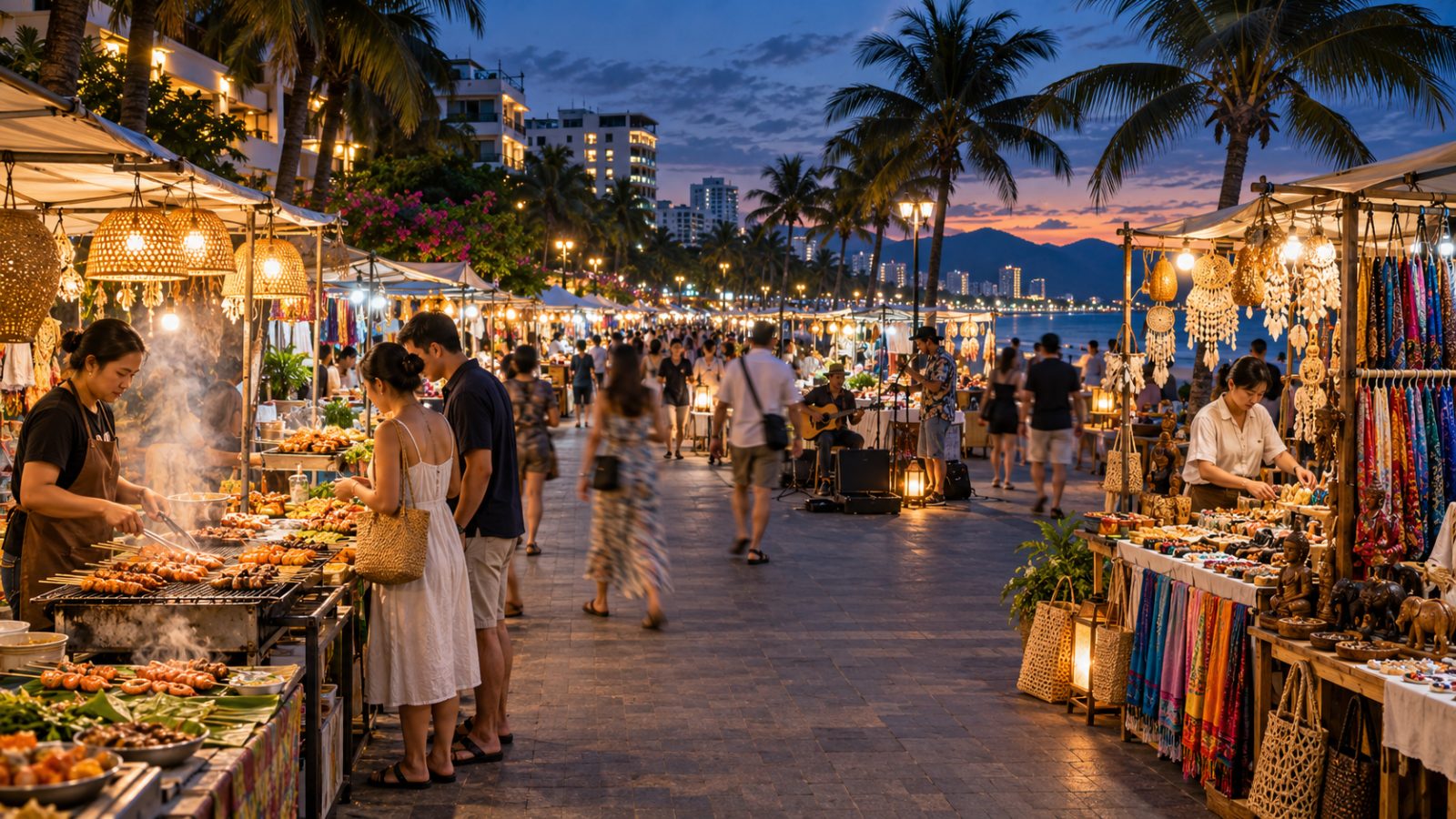
At the beach, don’t leave a bag unattended, even for a few minutes. In markets, wear your bag across your body, in front, where you can see it.
Crowds are where pickpockets work best, since nobody notices a hand near a pocket. Stay aware in packed aisles and at busy beachfront stretches, especially during peak hours.
Inflated Prices on Taxis, Tours, and Beach Services
Scams rate about the same as petty crime here, moderate at 5 out of 10. The common version isn’t theft. It involves a taxi, an informal tour, or a beach service quoting one price and charging another.
Lock in the total before you commit. Ask for the full price, including any add-ons, and get it in writing or on the app screen if possible.
For rides, stick to metered taxis or apps like Grab, where the fare is set before the car arrives. For tours and beach chairs, confirm the price out loud with the vendor, and keep the receipt or booking confirmation until the transaction is done.
Is Nha Trang Safe at Night?
Walking around after dark is fine in most of the tourist core, less so in a handful of specific spots once certain hours hit. Stick to the beachfront and the main nightlife strip, and switch to a tracked ride everywhere else late at night.
Where Walking Feels Easy After Dark
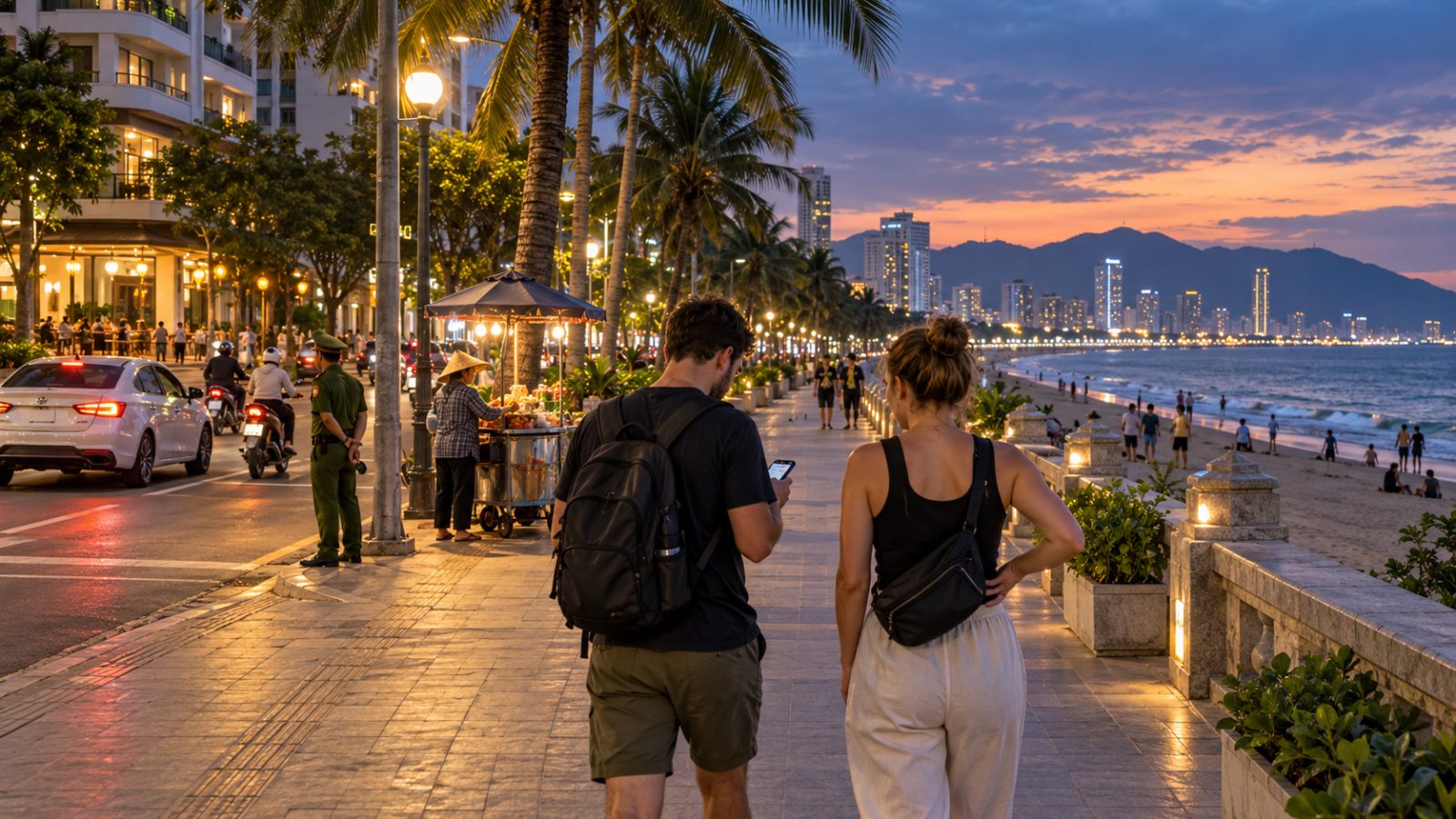
The central beachfront and the main tourist streets are well-lit and comfortable to walk at night. Streetlights, foot traffic, and open businesses make this the easiest stretch of the city after sunset.
The nightlife zone along Tran Phu is compact enough that you can walk between most bars and restaurants without needing a ride. Since 2025 safety upgrades, there’s a consistent police presence along this strip on weekend nights.
That mix of light, people, and visible police makes this stretch a solid default for an evening out. It’s not a guarantee nothing happens. It’s the part of town built for foot traffic after dark.
Spots and Hours Worth Planning Around
A few specific places shift risk once the clock passes certain hours. Dam Market is flagged for pickpocketing, scams, and drug dealing after 8pm. It’s a daytime market, so there’s little reason to be there late anyway.
Tran Phu South Beachfront carries its own risks after 10pm, including bag snatching, drink spiking, and jet-ski scams tied to late-night beach activity. If you’re out past that hour, keep drinks in sight and skip any beach-side offers that come up out of nowhere.
Along Tran Phu more broadly, motorbike bag-snatching is a persistent issue, especially near the open-air bars that line the road. Keep bags off the shoulder facing traffic and phones out of your hand while walking near the curb.
Outside the core tourist streets, occasional motorbike snatching happens in other tourist areas too. If you’re carrying anything valuable late at night, a short Grab ride costs little and removes the exposure entirely.
Beach Conditions, Rip Currents, and Crowds
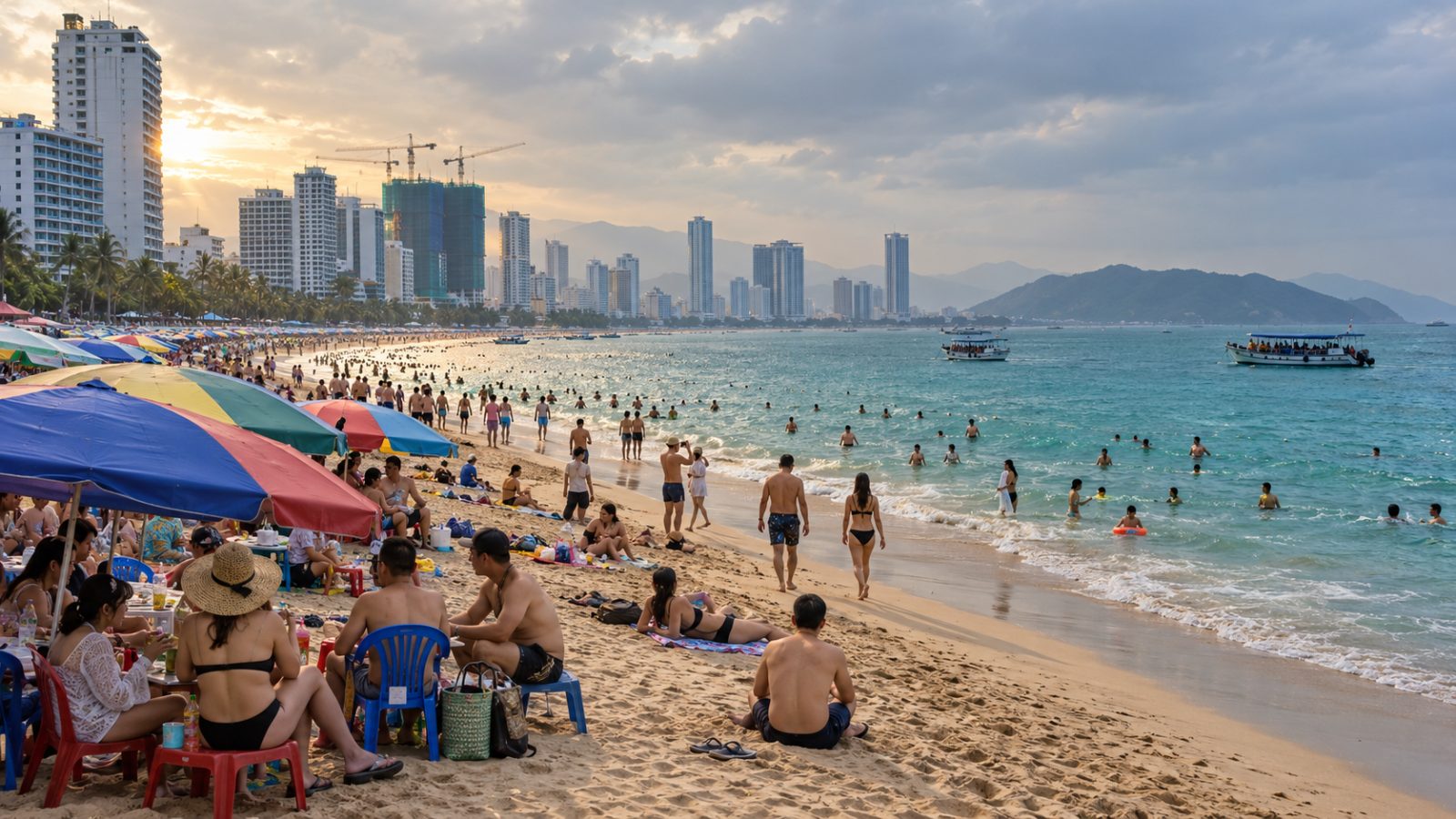
The water at Nha Trang Beach looks calm most of the year, but conditions shift with the season. Rip currents get the most attention from September to December, when the risk is highest.
The flag system is simple and worth checking before you wade in. Red flags mean swimming is prohibited, and anyone already in the water should get out right away.
The beach has eight marked swim areas. Local advice is straightforward. When black or red flags go up, stay on the sand. These zones exist for a reason, since currents and depth can vary sharply along the same stretch of coast.
Swimming inside the marked areas keeps you closer to any lifeguard coverage and away from the currents the flags are warning about.
Weather adds another layer during the wetter months. Storms, heavy rain, rough seas, and localized flooding can all affect safety when the region moves into its typhoon-influenced period.
That isn’t a reason to avoid Nha Trang in those months. It’s a reason to check conditions day by day instead of assuming the calm morning you arrived on will hold.
Crowds change the equation too, though in a different way. Holiday peaks and busy weekends bring bigger numbers to the beach, and bigger numbers mean more chances for petty theft.
A packed stretch of sand on a holiday weekend isn’t more dangerous in terms of the water. It’s riskier in terms of an unattended bag or phone, the same opportunistic theft that shows up anywhere crowds gather.
The practical read is to check the flags before swimming, stay inside the eight marked areas, and treat the September–December window and any stormy stretch with extra caution. On crowded weekends, keep valuables close instead of leaving them on a towel.
What Enforcement and Support Look Like on the Ground
Khanh Hoa authorities have been tightening tourism-security enforcement across Nha Trang, covering busy roads, accommodation businesses, entertainment venues, and visitor services. That push shows up as more oversight in the areas where tourists spend their time, including hotels, bars, tour operators, and the main streets connecting them.
For visitors, this translates into a system that’s actively watching, even if it isn’t visible at every moment.
Tourist help does exist in the city, but it comes with real limits. Language barriers show up often, and follow-up on reports can be slow.
Your own documentation is what moves a case forward. Save details before you need them, such as a taxi’s plate number, a tour operator’s name, and a timestamp on a photo.
If something goes wrong, clear information handed over at the start is what gets a report somewhere. A receipt or booking confirmation does more than a frustrated explanation.
Numbers and Addresses Worth Saving Now
Save these before you head out from the airport. Don’t wait until something happens. A screenshot takes ten seconds and works without signal.
Vietnam’s national emergency numbers are the same anywhere in the country. Call 113 for police, 114 for fire, and 115 for an ambulance. For anything specific to Nha Trang, the tourist police hotline is 0258 351 1900, and it’s built for the kind of situation a visitor runs into.
Beyond the hotlines, a few physical addresses are worth having on hand too, in case you need to show up in person or give a driver a destination.
| Contact | Address | Phone |
|---|---|---|
| Tourist Police Hotline (Nha Trang) | – | 0258 351 1900 |
| National Police | – | 113 |
| National Fire | – | 114 |
| National Ambulance | – | 115 |
| Nha Trang City Police Department | 1 Tran Phu, Loc Tho, Nha Trang, Khanh Hoa | +84 258 3822 222 |
| Khanh Hoa General Hospital | 1 Tran Phu, Loc Tho, Nha Trang, Khanh Hoa | +84 258 3822 222 |
| Vinmec Nha Trang International Hospital | 1 Nguyen Tat Thanh, Vinh Hai, Nha Trang, Khanh Hoa | +84 258 3888 888 |
Quick Answers to Common Safety Questions
A lot of what people search boils down to the same handful of questions. Common queries include whether Nha Trang is safe for tourists and whether it is safe to travel right now. The short answers are below, with the specifics that matter.
How Is Traffic Safety in Nha Trang?
Getting around the city is usually straightforward, but road safety is a bigger day-to-day concern than crime. Stick to reputable rides like Grab or metered taxis, and avoid walking home late near traffic by taking a short ride instead.
What Are the Most Common Crimes and Scams Affecting Tourists?
Pickpocketing ranks high on the list of common crimes in almost any tourist destination, and Nha Trang isn’t an exception. Thieves tend to target crowded spots, including main streets, public transportation hubs, markets, and nightlife areas.
That risk spikes further during festivals or major events, when crowds thicken and distraction gets easier.
Who Should I Call If Something Goes Wrong?
For immediate help, Vietnam’s national emergency numbers work the same way everywhere in the country. Call 113 for police, 114 for fire, and 115 for an ambulance.
For the tourist police hotline and specific hospital and police addresses in Nha Trang, save the contacts listed earlier before you head out.